Robot Locomotion Systems Explained
How robots move.

Watch a few robots move and the way they travel gives their body away. One rolls along a corridor. Another climbs a pile of rubble on tracks. A third steps over a gap that would stop both. Others fly or swim, and a few slither.
Every one of them solves the same problem in a different way. Each kind of movement is at home on some ground and awkward on the rest.
Wheels

Wheels roll, and rolling costs little energy on firm ground. Walking also lifts and lowers the body with every step, which costs energy that rolling does not (Siegwart and colleagues).
Most wheeled robots cannot move straight sideways, because the wheels roll forward and back but resist sliding. Engineers call these robots nonholonomic (yes, nonholonomic is a real word). Like a car, such a robot can still reach any spot and heading on open ground. It just has to drive and turn on the way. A robot that can move in any direction at any moment is called omnidirectional (Lynch and Park).
How the wheels are arranged, powered and steered decides how a robot turns, and Robot Drive Systems Explained covers that. How the wheels follow the ground decides where the robot can go, and Robot Suspension Explained covers that.
Tracks
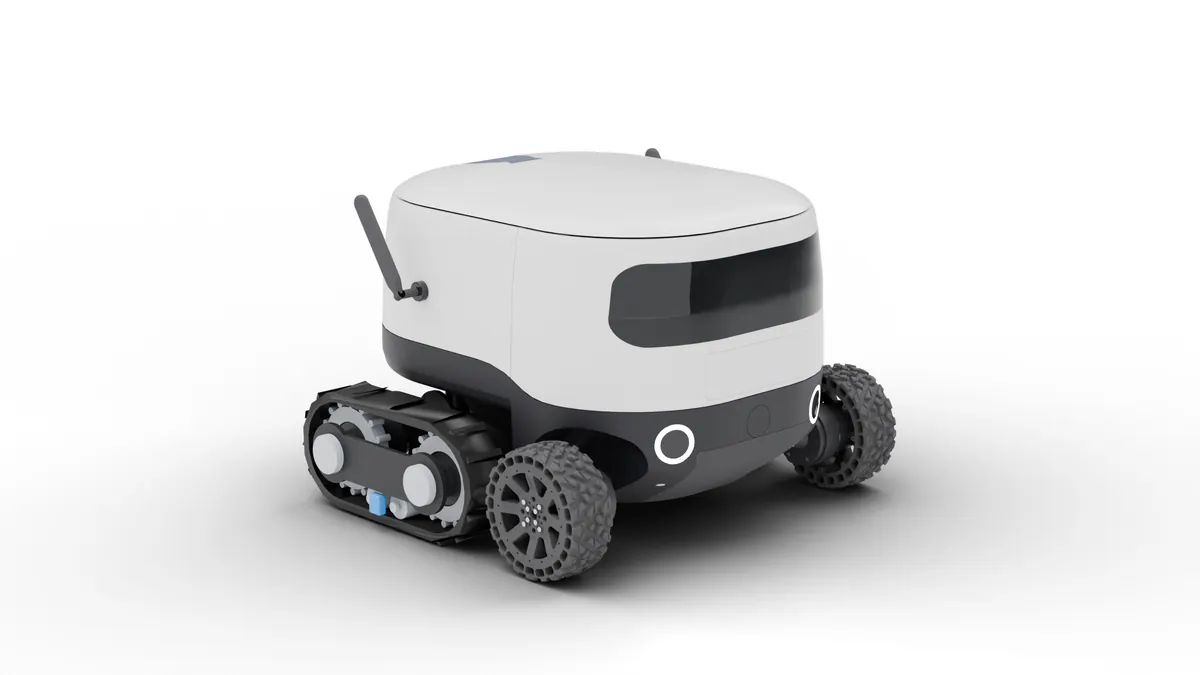
A tracked robot runs on a pair of belts instead of wheels. It steers the way a skid-steer robot does, by running one side faster than the other (Kozłowski and Pazderski).
Researchers who work on them say tracks give superior traction, stability and load distribution compared with wheels. They name agriculture, exploration and disaster response as places tracked robots work, and they point to uneven, soft or vegetation-covered ground (Li and colleagues).
The cost is control. The interaction between a track and soft soil is complex, and it disturbs the robot in ways that make precise driving hard (Li and colleagues).
Legs

Legs give up the efficiency of wheels to reach places wheels cannot. A legged robot can step over a gap or onto a ledge that would stop a wheel, and some of the hardest ground on Earth is open to four-legged animals and closed to most machines (Lee and colleagues).
The price is complexity. Each leg needs at least two joints, one to lift and one to swing, and most have three, each with its own motor. Standing still on point feet takes at least three legs, while walking with a statically stable gait takes four or six, because some feet are always in the air (Siegwart and colleagues).
The control is the hardest of any movement here. Hand-written controllers for legged robots have grown complex, and the controllers still fall short of how animals move. Lee and colleagues trained a four-legged robot's controller with reinforcement learning in simulation, and it kept its footing on natural terrain it had never met in training (Lee and colleagues).
Flying
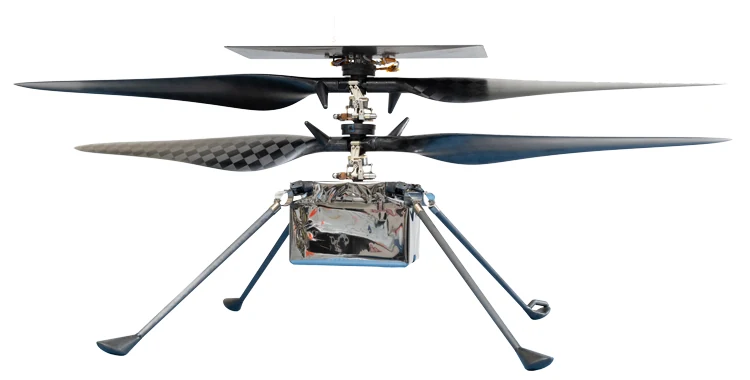
A flying robot leaves the ground problem behind and takes on a new one, which is staying up. A multirotor stays up with its rotors. The common case has four, and researchers have written tutorial introductions to how such vehicles are modelled and controlled (Mahony and colleagues). A fixed-wing aircraft gets its lift from its wings, and that lift comes from the motion of the aircraft through the air (NASA).
NASA's Ingenuity showed how far the idea reaches. On 19 April 2021 it made the first powered flight on another planet. Mars has an atmosphere less than one percent as dense as Earth's, and Ingenuity weighed 1.8 kilograms and went on to complete 72 flights (NASA).
Swimming and underwater
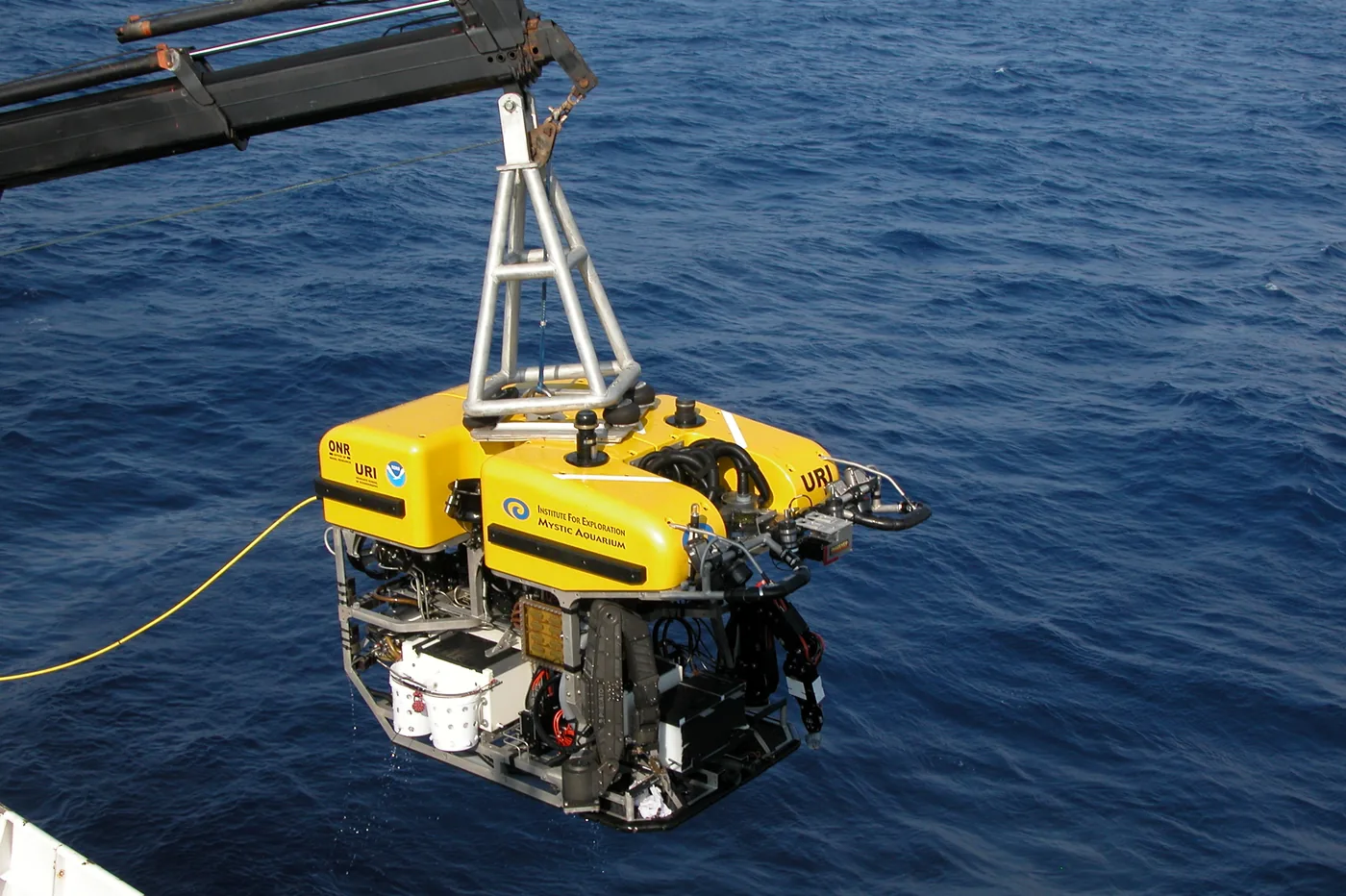
Underwater robots come in two broad kinds. NOAA describes a remotely operated vehicle (ROV) as a tethered robot, so control signals travel directly between operators on the surface and the vehicle. An autonomous underwater vehicle (AUV) is pre-programmed to drift, dive or glide through the ocean without real-time control by people (NOAA Ocean Exploration).
Many ROVs also collect samples with an arm that a pilot operates. AUVs collect sensor data and survey the ocean while scientists do other work (NOAA Ocean Exploration).
Crawling and snake-like
A snake robot is a chain of joints that moves by bending. A review of the field found that most research had looked at locomotion over flat surfaces. It also found a growing trend toward more challenging environments (Liljebäck and colleagues).
Hybrids
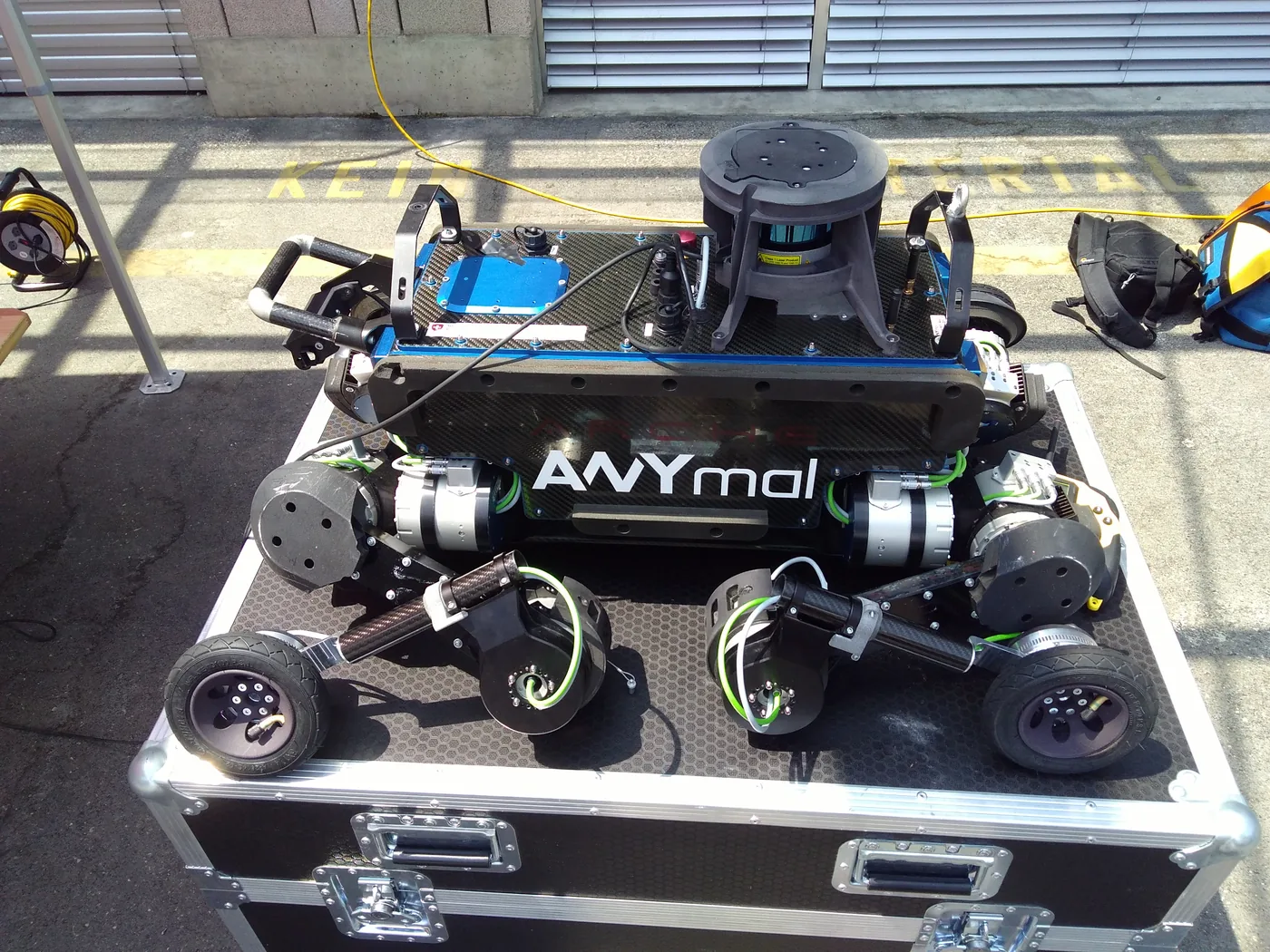
Some robots mix two kinds of movement. Researchers at ETH Zurich studied wheeled four-legged robots, which combine the advantages of walking and driving. They tested their control framework on ANYmal, with a torque-controlled wheel on the end of each leg (Bjelonic and colleagues).
How to choose
Each way of moving suits the ground more than the job.
| Movement | At home on | The cost |
|---|---|---|
| Wheels | Firm, flat ground | Wheels struggle on rough ground |
| Tracks | Soft, uneven or vegetation-covered ground | Hard control and lower efficiency than wheels |
| Legs | Steps, gaps and broken terrain | Many joints and the hardest control |
| Flying | Open air, over anything below | Staying up takes constant work |
| Swimming | Water, tethered or free | Pressure and distance from the operator |
| Snake-like | Narrow and cluttered spaces | Still a research area |
| Hybrids | Ground where one movement is not enough | More parts and a harder control problem |
Our robots
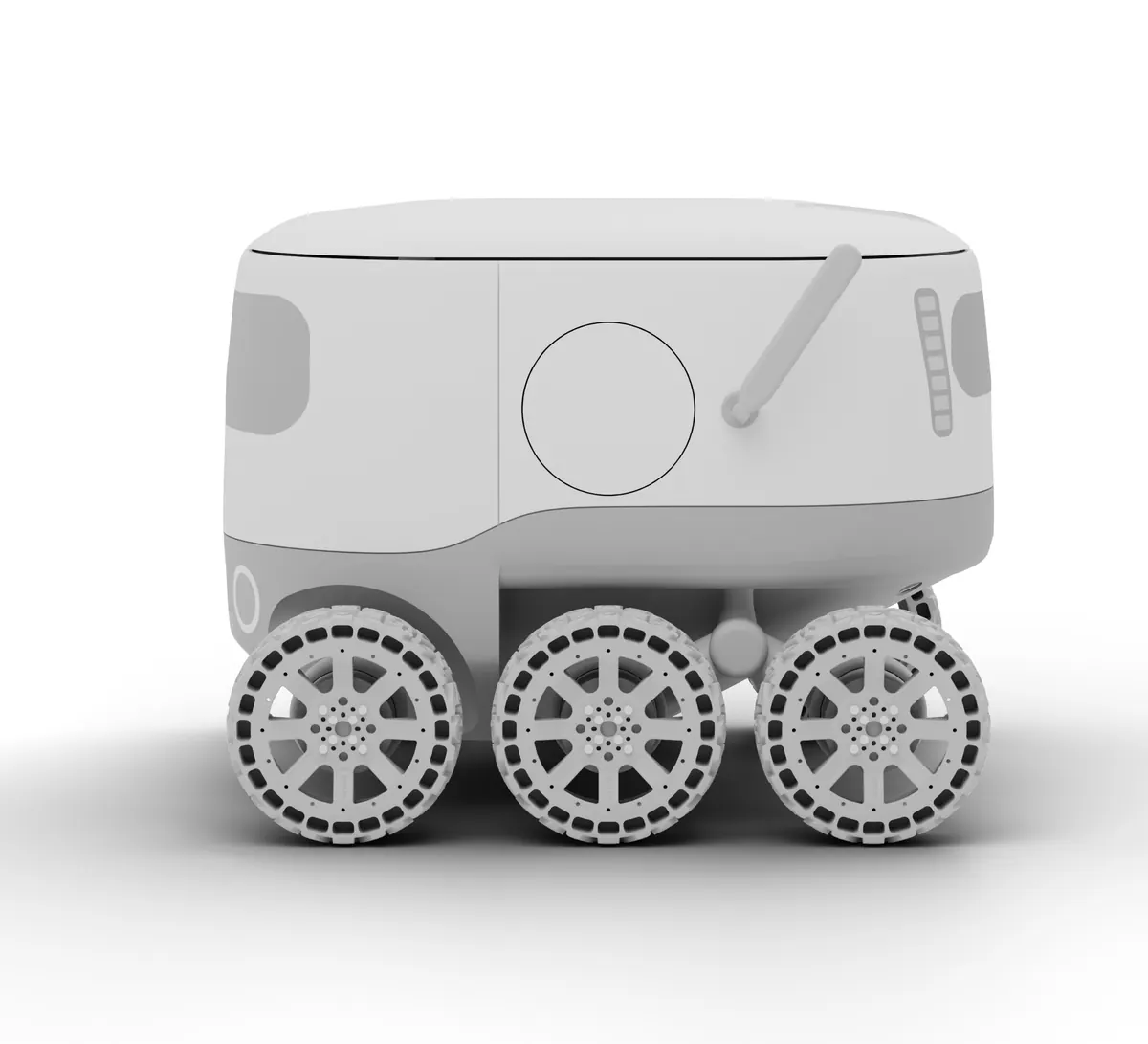
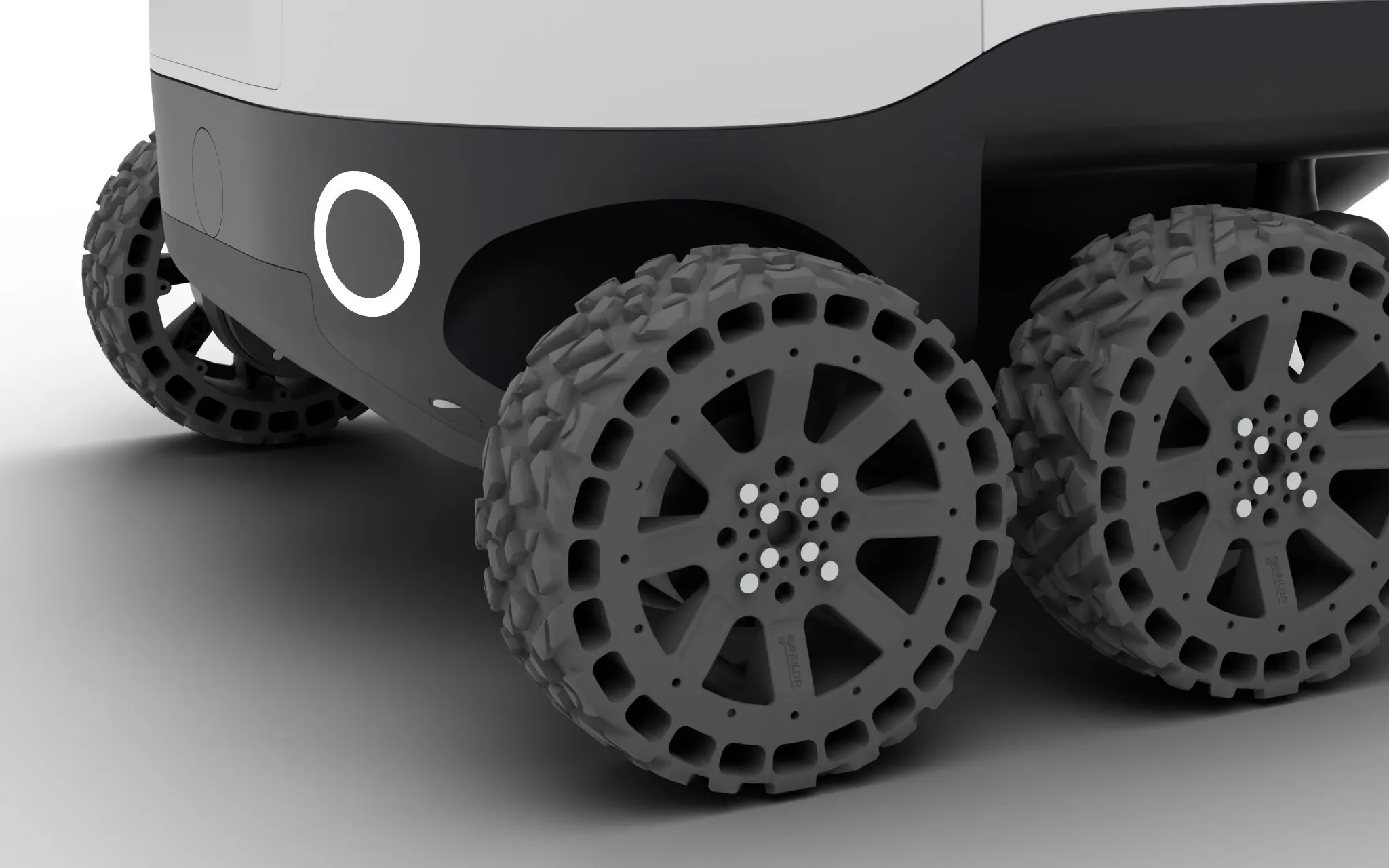
Our courier has six driven wheels on rocker bogies, and it turns the skid-steer way. It runs in simulation today.
Our software is built so the body can change. The robot types in our catalogue include legged robots, drones and fixed-wing aircraft beside wheeled ones. Only wheeled robots run today, and we have drawn a tracked courier and a drone bay for the courier's base as design studies.
The robots page shows the kinds of robot and the work each one does.
More on how robots move
Robot Drive Systems Explained goes deeper on how wheels are arranged, powered and steered. Robot Suspension Explained covers how wheels follow the ground.