Robot Suspension Explained
How wheels follow the ground.

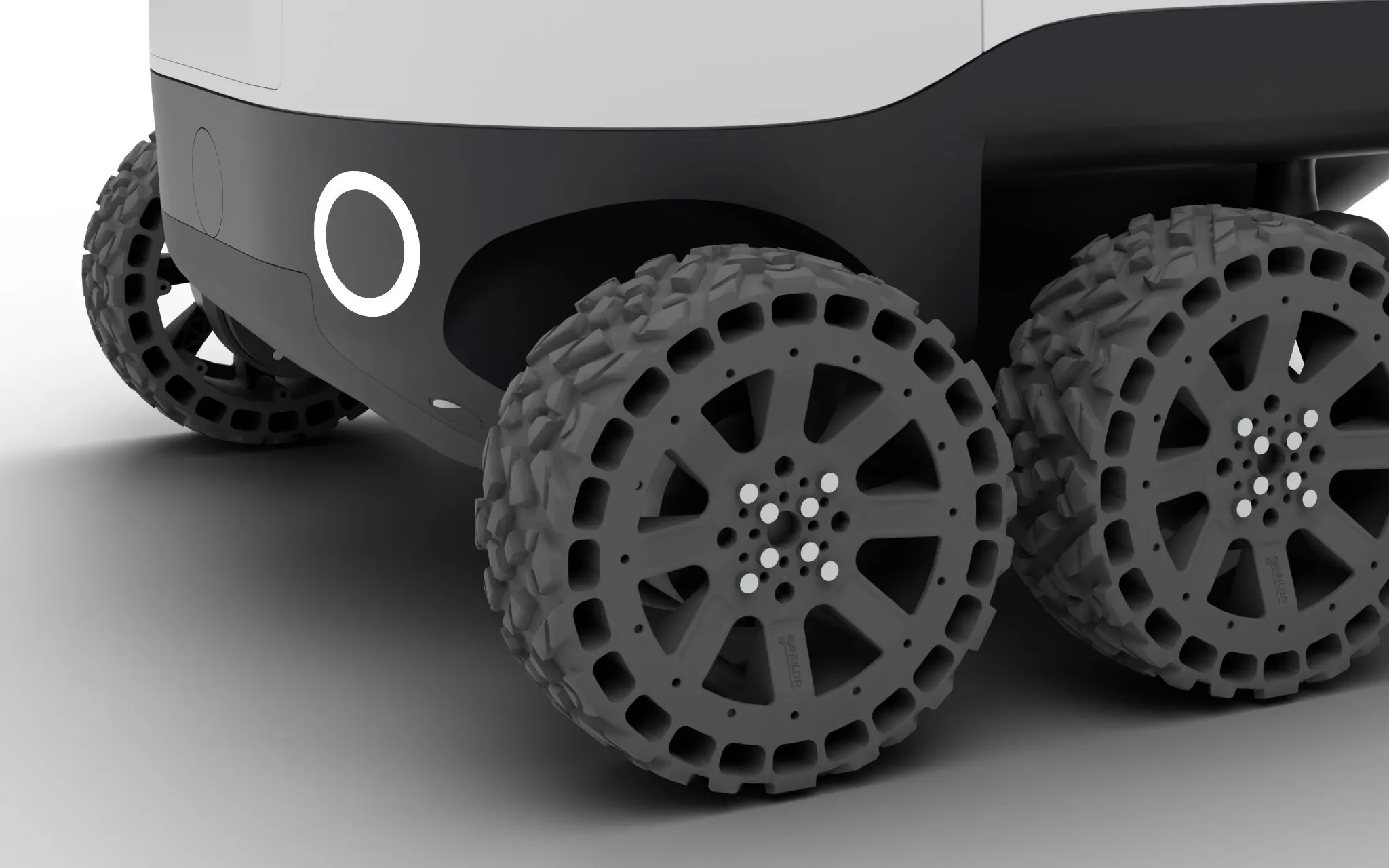
Wheels need to follow the ground, and Robot Locomotion Systems Explained only touches on how. How they are arranged and steered is in Robot Drive Systems Explained.
Why a robot needs a suspension
Three wheels are enough for a robot to stand steadily, but a fourth wheel or more needs a suspension that lets each wheel find the ground (Siegwart and colleagues). Without one, a wheel can hang in the air over a dip and a robot loses grip where it needs it.
One review divides suspensions into two kinds, non-independent and independent. Both are common on ordinary vehicles. They cope with city streets and highways, but not with extremely uneven ground, and the rocker bogie is the answer the review describes for that (Yang and colleagues).
The rocker bogie

The rocker bogie is a suspension. It decides how the wheels follow the ground, so the robot still needs a way to steer.
Each side of the robot has a rocker. This is a long arm that pivots on the body and carries one wheel. On the rocker's other end sits a bogie, a shorter arm that carries two more wheels on its own pivot. A differential at the centre of the body links the two rockers (NASA).
Donald Bickler patented the design for NASA in 1989. His patent says it keeps a substantially constant weight on all wheels, and so constant traction (Bickler). NASA's Perseverance rover rides on one. It can drive over rocks or through dips as large as its 52.5 cm wheels, and it is designed to withstand a 45-degree tilt in any direction without tipping over (NASA).
A rocker bogie answers a question every robot with more than three wheels faces, which is how each wheel finds the ground (Siegwart and colleagues).
Perseverance steers with its own motor on each corner wheel, which lets it turn in place (NASA). A simpler rocker-bogie robot can turn the skid-steer way instead.
Our courier
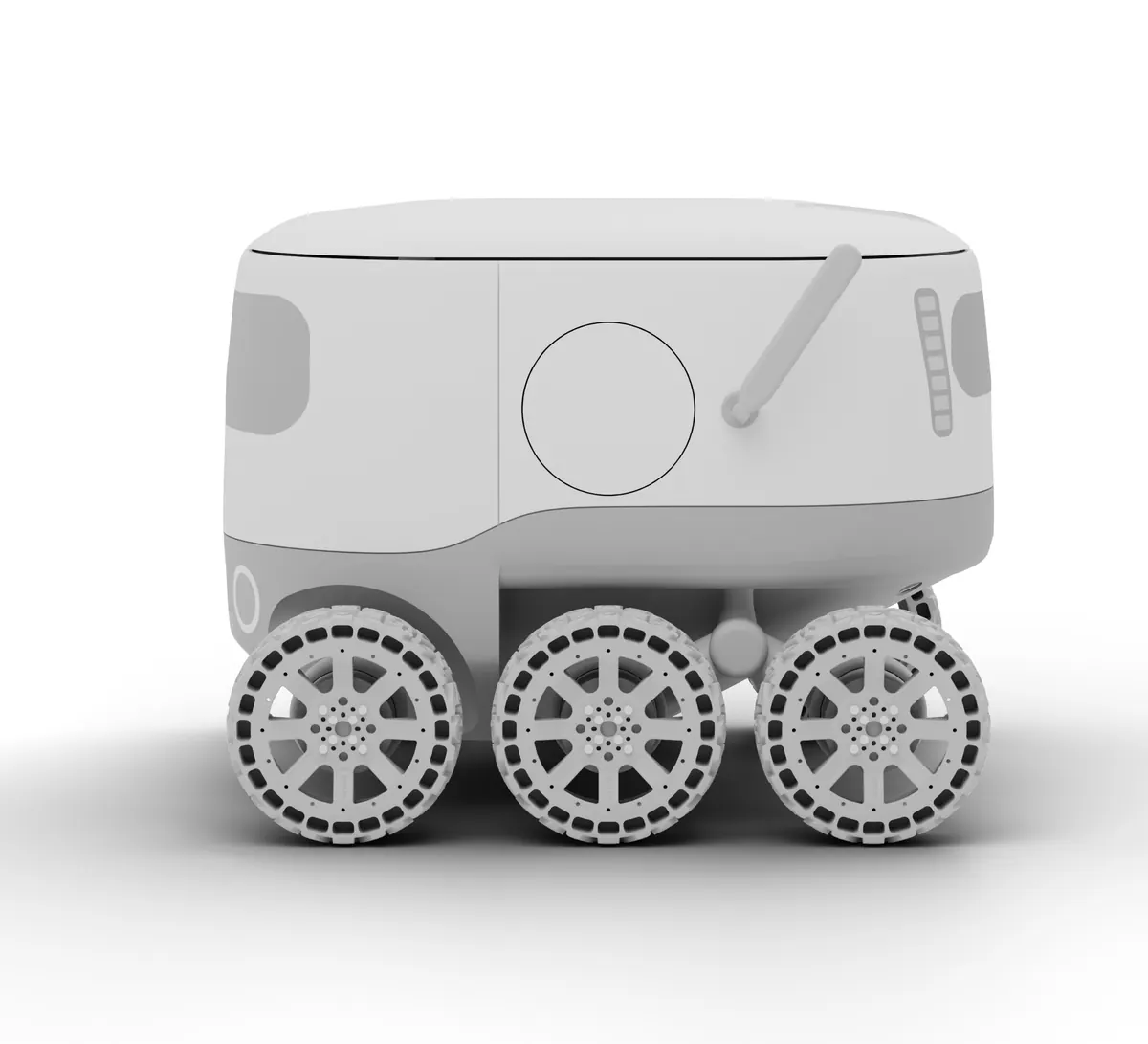
Our courier has six driven wheels on rocker bogies, which are designed to keep its cargo level over a curb. It runs in simulation today.