The Week in Robotics, 2 Nov
The news from 26 October to 1 November ran from a legged robot for explosive sites to a million cars moved without a driver. Two research results and a racing drone round out the issue.
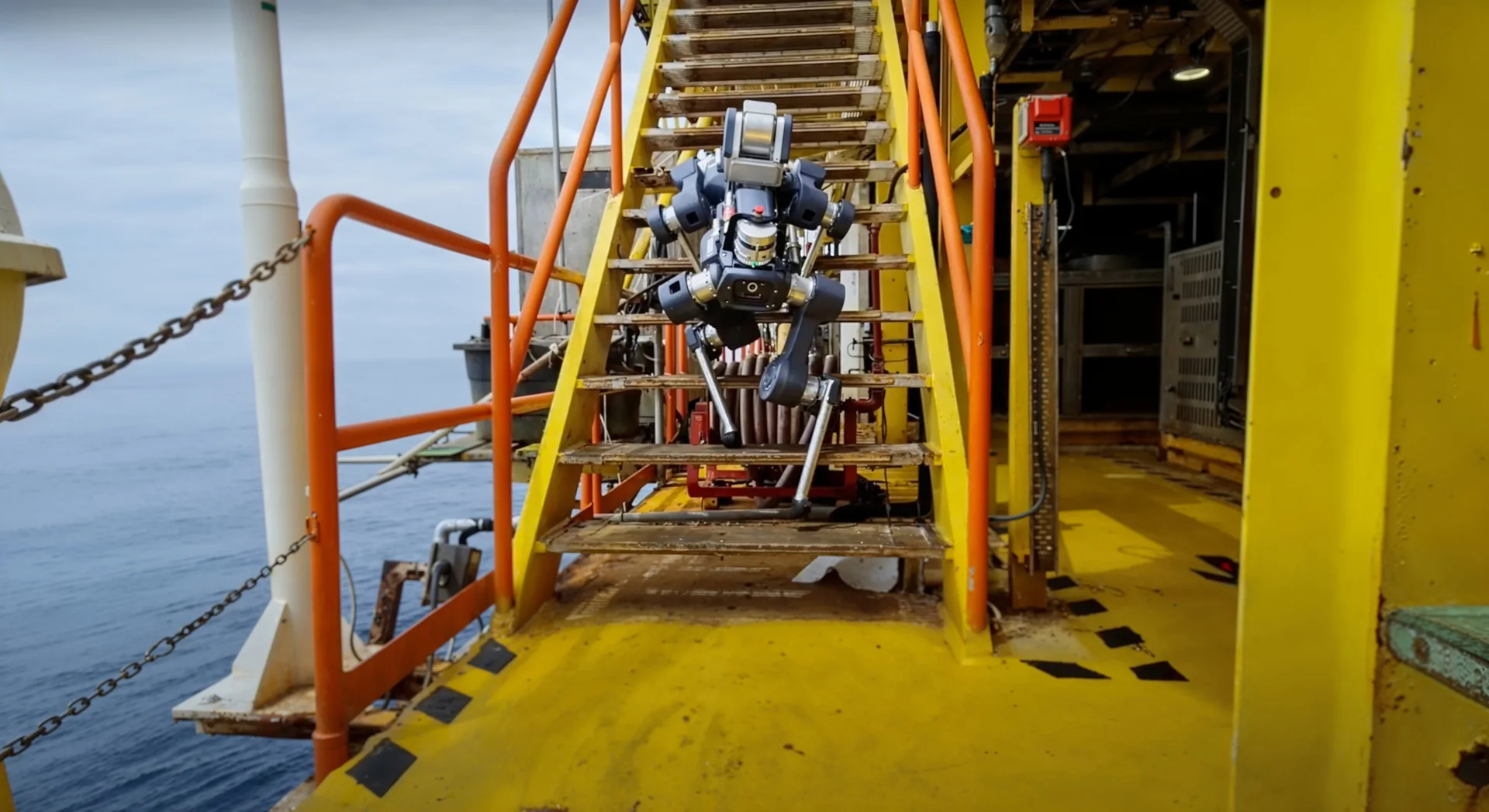
ANYmal X walking down a stair on an offshore rig by Cvoellmy, 26 October 2022, via Wikimedia Commons, CC BY-SA 4.0. The picture is resized.
Hardware
ANYmal X is shipping
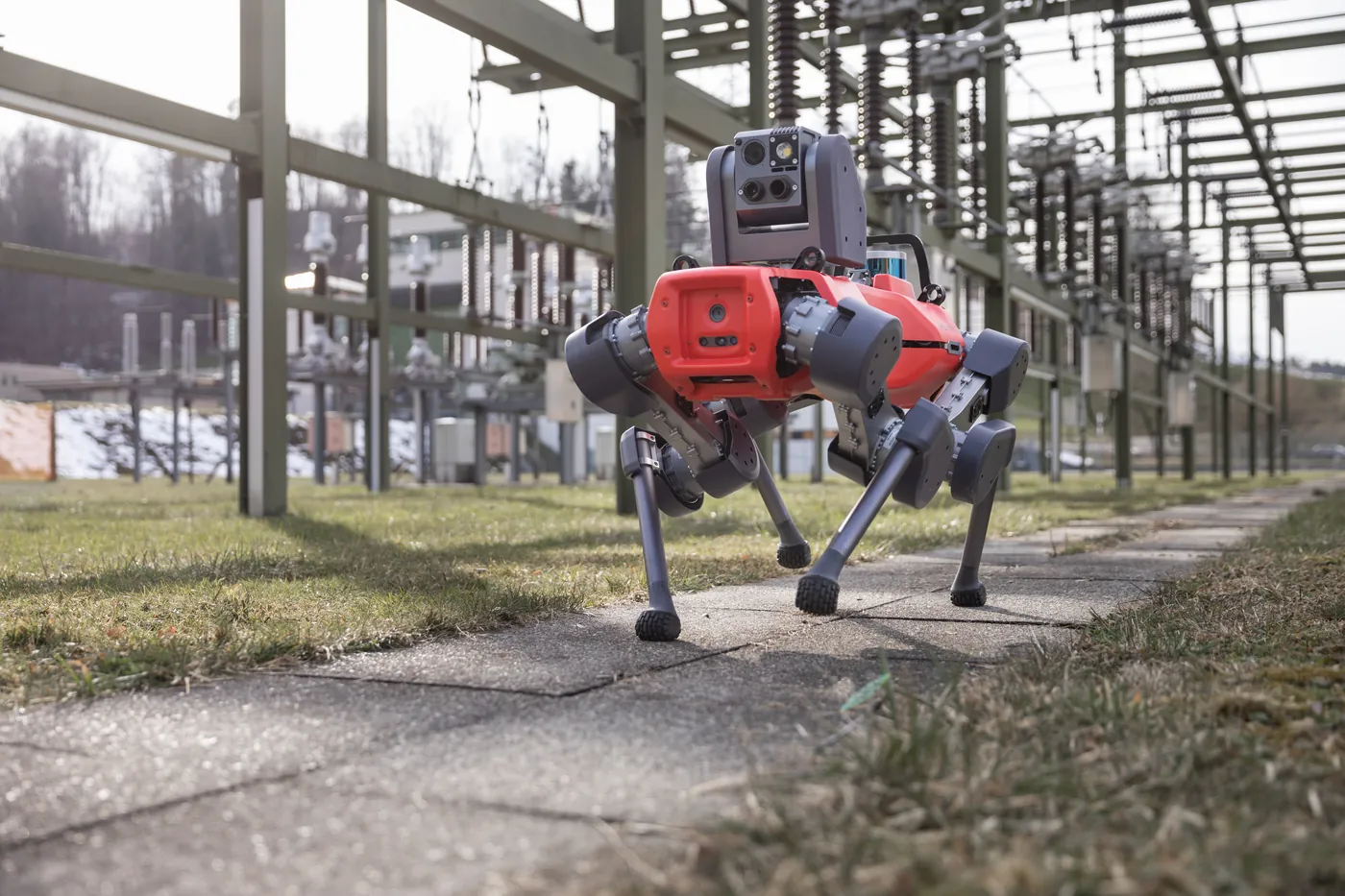
ANYbotics has begun delivering ANYmal X, a four-legged inspection robot built for oil, gas and chemical sites where a spark could ignite the air. It holds ATEX and IECEx certification, the European and international standards for explosive atmospheres. Its computer and sensors sit in sealed, nitrogen-filled chambers, and flameproof casings protect its 12 leg actuators and battery (The Robot Report).
Luxonis put five cameras on one board
The OAK 4 FFC is a 70 by 53 millimetre board with five camera ports. It computes stereo depth, which is distance from two views, and also runs neural networks on the board. Luxonis says the cameras calibrate themselves from the scene, with no calibration target (Luxonis, Robotics Tomorrow).
Xpanner's pile driver navigates to each pile
An operator uploads a pile plan and drives the X1 Piling R6 to the row. After that the machine navigates to later pile positions with GNSS, which is satellite positioning, and records each pile's depth and plumb, meaning how upright it stands. The claims are Xpanner's, and the article does not test them (The Robot Report).
Software
Embotech reports one million vehicles moved
Embotech says its software has moved one million new vehicles across four BMW plants. That is about 3,500 moves a day, with availability above 99.5%. Lidars mounted in the factory do the seeing, so the cars need no extra sensors.
A separate deterministic safety layer, which gives the same output for the same input, sets the safety boundary, and Embotech says TÜV SÜD certified it (The Robot Report).
A Gazebo plugin for Livox lidars
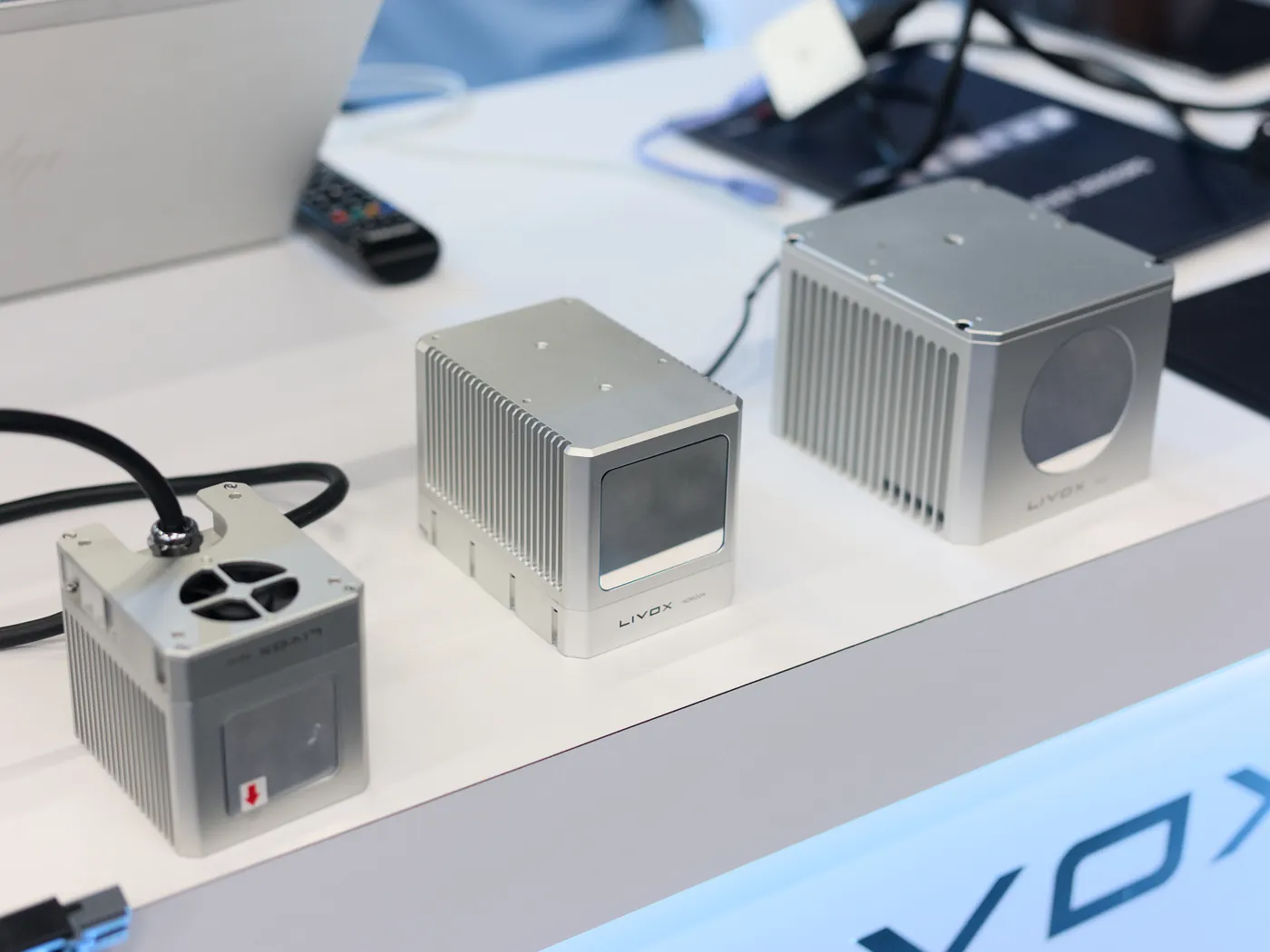
A developer released livox_gz_sim on 1 November. It simulates two Livox lidars and an IMU, an inertial measurement unit, in Gazebo Harmonic, the open-source robot simulator. Its output matches the real driver, so FAST-LIO, a lidar mapping method, runs on it unchanged. The plugin needs a GPU, and the post names no licence (ROS Discourse).
Research and innovation
A robot skin that pulls back from a needle
A team at the Southern University of Science and Technology built an iontronic skin, which senses pressure through a gel of charged particles. It has more than 10,000 sensing points, each read 100 times a second. Spinal-cord-inspired processing cut the data 268-fold, and it still told 10 object types apart with 98.2% accuracy. Fingers gripped 0.5 millimetre pencil lead and withdrew from a needle. The authors say the circuitry is bulky (Tech Xplore, in Nature Machine Intelligence).
A flying robot that survives a squash
Researchers at UCLA and UC Davis built an all-polymer flyer that weighs 185 milligrams. A thin polymer film flaps the wings directly. The flyer flew again after a flyswatter hit and also after being flattened under about 11,000 times its weight. However, the flyer still takes power through wires and has no onboard sensors (Tech Xplore, in Science Robotics).
One to read
MonoRace, a drone that beat human champions with one camera
The paper came out on 14 October, and IEEE Spectrum showed the drone in Video Friday on 30 October. It had one camera and an IMU, and no GPS, yet it reached up to 100 km/h. A small neural network sent motor commands 500 times a second (Tech Xplore, IEEE Spectrum).